The 9/11 Memorial & Museum: commemorate and learn
Collective memory and education are essential components for an informed and resilient society. In this context, the September 11 Museum in New York stands as an emblematic place of commemoration and learning. This article explores the fundamental roles of this museum: memory, education, and its profound impact on visitors.
The genesis of the Museum
Historical context: the September 11, 2001, Attacks
On September 11, 2001, the world witnessed one of the most devastating terrorist attacks in history. Four commercial airplanes were hijacked by Al-Qaeda members; two crashed into the Twin Towers of the World Trade Center in New York, one into the Pentagon in Washington D.C., and the fourth crashed into a field in Pennsylvania after passengers attempted to regain control of the plane. These events forever changed life in the United States and around the world.
Creation initiative: decision to build a Museum and Memorial at the World Trade Center Site
After the attacks, the need arose to create a place that honored the memory of the victims and provided a space for reflection. Thus, it was decided to build the September 11 Museum and Memorial on the site of the former World Trade Center. This project was conceived not only as a monument to the lost lives but also as an educational tool for future generations.
Initial objectives: pay tribute to the victims, document the events, and provide a space for reflection
The museum had several clear objectives from its inception: to pay tribute to the nearly 3,000 victims of the attacks, to comprehensively document the events of that day and their consequences, and to offer a space for reflection where visitors could learn and process what happened.
A place of commemoration
Conception of the Museum: architecture and symbolism of the spaces
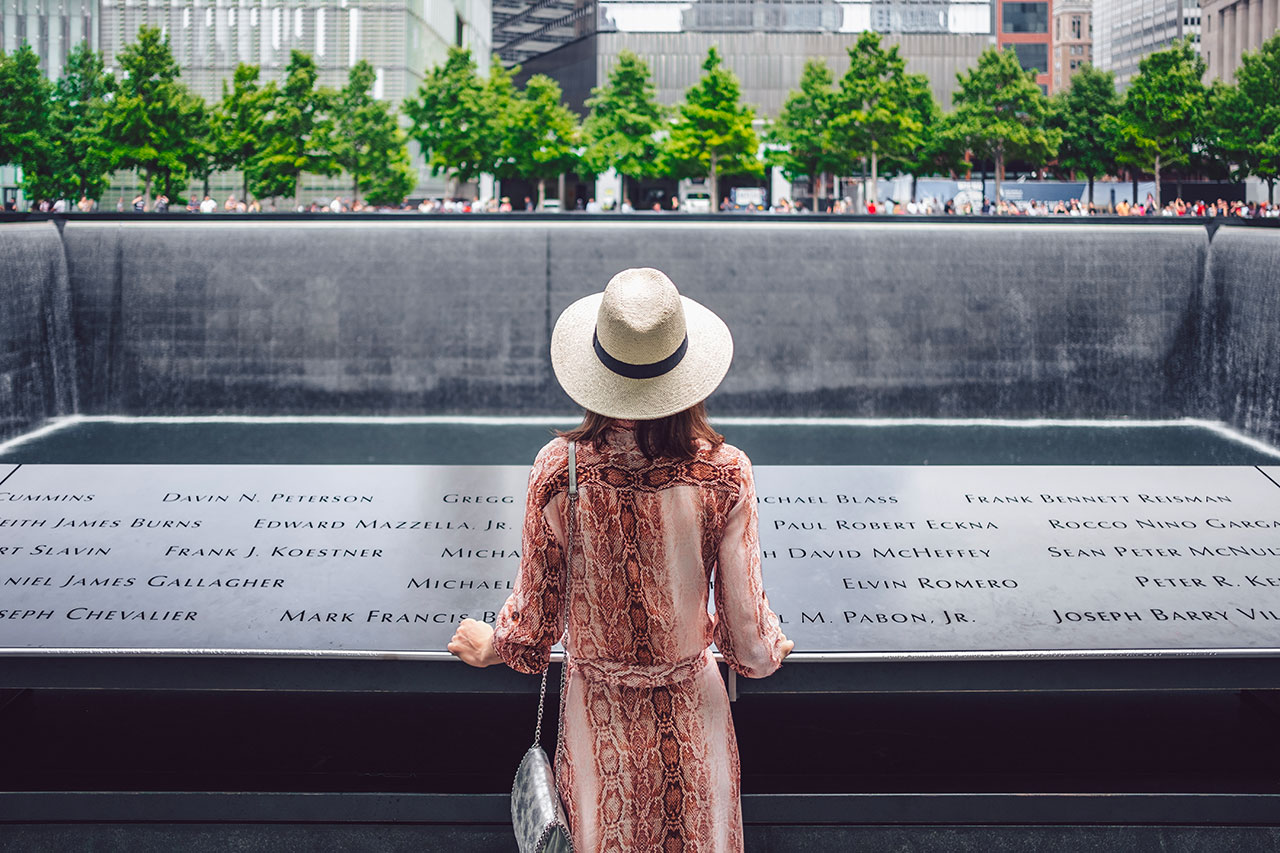
The architectural design of the museum is laden with symbolism. Designed by Michael Arad and Peter Walker, the memorial includes two enormous reflecting pools with waterfalls located at the foundations of the former Twin Towers. These pools are surrounded by bronze panels inscribed with the names of all the victims, providing a solemn space for commemoration and mourning.
Permanent exhibitions: presentation of artifacts, photos, and testimonials
The museum houses several permanent exhibitions that include artifacts, photographs, and testimonials narrating the story of the attacks and their consequences.
Victims’ Memorial
This section is dedicated to the victims of September 11, with personal objects and biographies that humanize the individuals behind the names.
Historical reconstruction
A detailed chronology of the day’s events, from the hijacking of the planes to the collapse of the towers, provides a complete and comprehensible narrative.
Commemorative ceremonies and events: annual activities, such as September 11 commemorations
Every year, the museum and memorial organize commemorative ceremonies on September 11. These events include moments of silence, readings of the victims’ names, and speeches that honor the memory of the deceased and celebrate the resilience of the survivors and first responders.
A space for education and reflection
Educational programs: school visits, workshops, and conferences
The museum offers a variety of educational programs designed for different audiences. School visits are common, providing students with an opportunity to learn about the events in an interactive and emotional manner. Additionally, workshops and conferences are organized, addressing various topics related to September 11 and its global repercussions.
Temporary exhibitions: varied themes addressing the global consequences of September 11
In addition to its permanent exhibitions, the museum hosts temporary exhibitions that explore related themes such as post-September 11 security policies, the fight against terrorism, and personal stories of resilience and overcoming adversity.
Pedagogical resources: educational materials for teachers and students, research projects
The museum provides educational resources for teachers and students, including study guides, multimedia materials, and opportunities for research projects. These resources help integrate the history of September 11 effectively into the educational curriculum.
Impact on visitors
Emotional reactions: visitor testimonials, psychological impact
The emotional impact of the museum on visitors is profound. Testimonials from those who have toured its halls reflect a wide range of emotions, from sadness and grief to admiration for the bravery shown that day. The psychological impact can be intense, as the museum does not shy away from depicting the brutal reality of the attacks.
How the Museum influences perception of terrorism and democratic values
The museum not only informs but also invites deep reflection on topics such as terrorism, freedom, and democratic values. By presenting a comprehensive view of the events and their consequences, the museum helps visitors better understand the contemporary world and the challenges we face.
Contribution to collective resilience and understanding of contemporary challenges
The September 11 Museum plays a crucial role in society by fostering collective resilience and providing a space for understanding contemporary challenges. Its existence ensures that future generations do not forget the events of that day and can learn valuable lessons for the future.
The September 11 Museum is much more than a place of commemoration; it is a vital space for education and reflection. Its importance lies in its ability to keep the memory of the victims alive, educate future generations, and contribute to a more informed and resilient society. The existence of places like this is crucial for transmitting memory and shaping informed and aware generations.