The Bagel in New York: a journey between heritage and modernity
The bagel, that small ring of bread so beloved by New Yorkers, is much more than just a simple treat. Over the decades, it has become a true culinary symbol, rooted in the traditions of Jewish immigrants from Eastern Europe and evolving within New York’s vibrant modern food scene. Today, the bagel is experiencing a true renaissance, combining respect for ancestral recipes with bold culinary innovations. Let’s discover together the history of this iconic food, its evolution through the centuries, and the best places to enjoy a bagel in the city that never sleeps.
The history of the bagel in New York: from immigrant roots to today’s culinary scene
From Eastern Europe to New York
The bagel has its roots in the Jewish communities of Eastern Europe, specifically Poland, where it appeared in the 17th century. This small round bread, with a dense texture and a crispy outer layer, was often consumed during religious celebrations or to mark joyful events. The unique aspect of the bagel lies in its preparation: it is briefly boiled before being baked, giving it a texture unlike other breads.
At the start of the 20th century, with the wave of immigration from Eastern Europe, Jewish families brought their culinary traditions with them, and the bagel began to appear in the popular neighborhoods of New York, particularly in Manhattan’s Lower East Side. This neighborhood, a melting pot of Ashkenazi Jewish culture, quickly became the cradle of the bagel in New York.
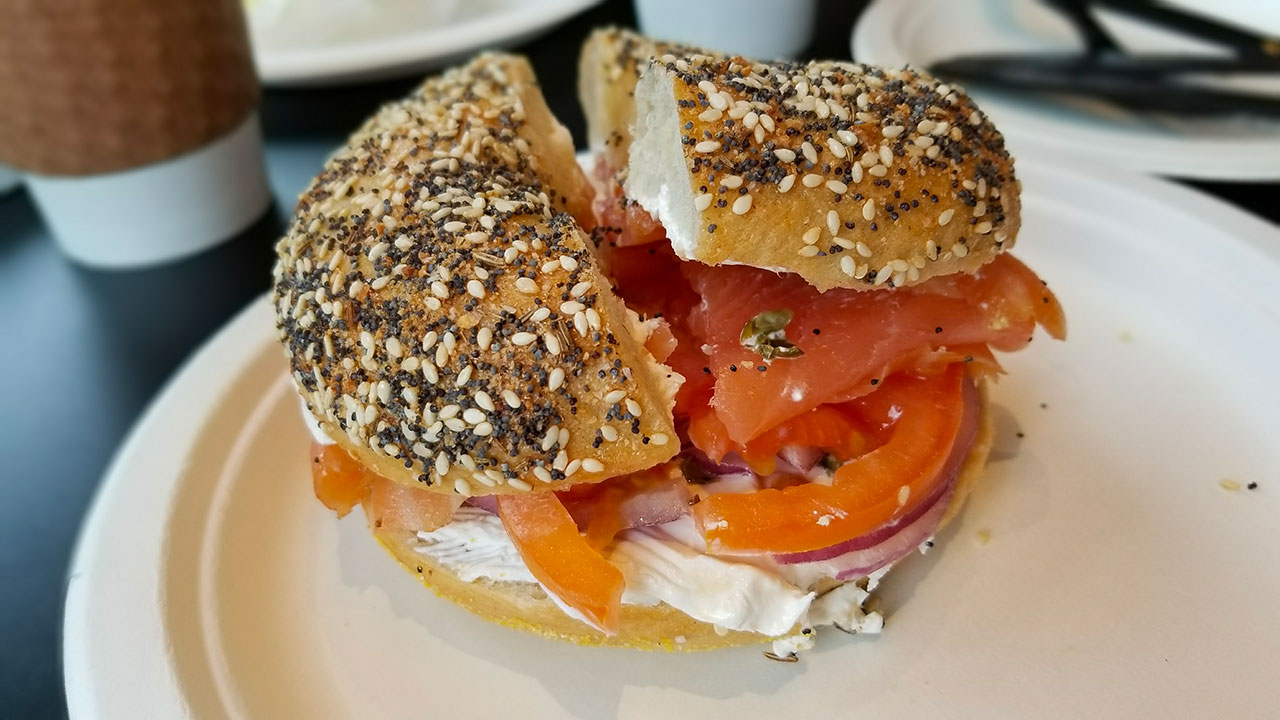
The first bakeries specializing in bagel-making set up shop in the bustling streets of the Lower East Side. At the time, the bagel remained an artisanal product, made by bakers using traditional methods passed down through generations. Bagels were often eaten on Sunday mornings with lox (smoked salmon) and cream cheese, a combination that has become inseparable from the New York bagel today.
The evolution of the bagel: from traditional bakery to commercial expansion
As the Jewish population continued to spread across New York, the bagel gained popularity in the 1920s and 1930s. However, it was in the 1960s that the bagel truly entered mainstream American culinary culture, transcending the borders of Jewish communities to become a mass-market product. This was largely due to the rise of industrial bakeries, which began producing bagels on a larger scale, facilitating their distribution in grocery stores and supermarkets.
One key moment in the popularization of the bagel was the creation of Lender’s Bagels, the first brand to sell pre-packaged bagels on a large scale and distribute them nationwide. By the 1980s and 1990s, the bagel had become a staple of American breakfasts, even competing with traditional toast or muffins.
Despite this commercial expansion, New York remains the undisputed capital of the bagel. Here, the bagel retains its artisanal and authentic character in small neighborhood bakeries that resist industrial chains. For many, the New York bagel is unique because of the city’s water quality, which is believed to play a key role in the incomparable texture and taste of this iconic bread.
Bagels today: classic varieties and gourmet innovations
The classics: cream cheese and lox
The traditional New York bagel is often simple and comes in classic varieties: plain, sesame, poppy seed, onion, or salt. The most common accompaniment is cream cheese, a creamy and slightly tangy spread that perfectly complements the bagel’s dense texture. This combination of bagel and cream cheese has won the hearts of many New Yorkers and tourists over the years.
Lox, or smoked salmon, is also a popular addition, offering an extra layer of salty flavor. This pairing has become a true institution in New York and can be found in many traditional bagel shops.
Modern innovations: new flavors and influences
While the traditional bagel with cream cheese and lox remains a go-to option, New York’s ever-evolving food scene has seen the rise of new trends and flavors. Modern bakeries today explore bold combinations, sometimes fusing bagels with world cuisines.
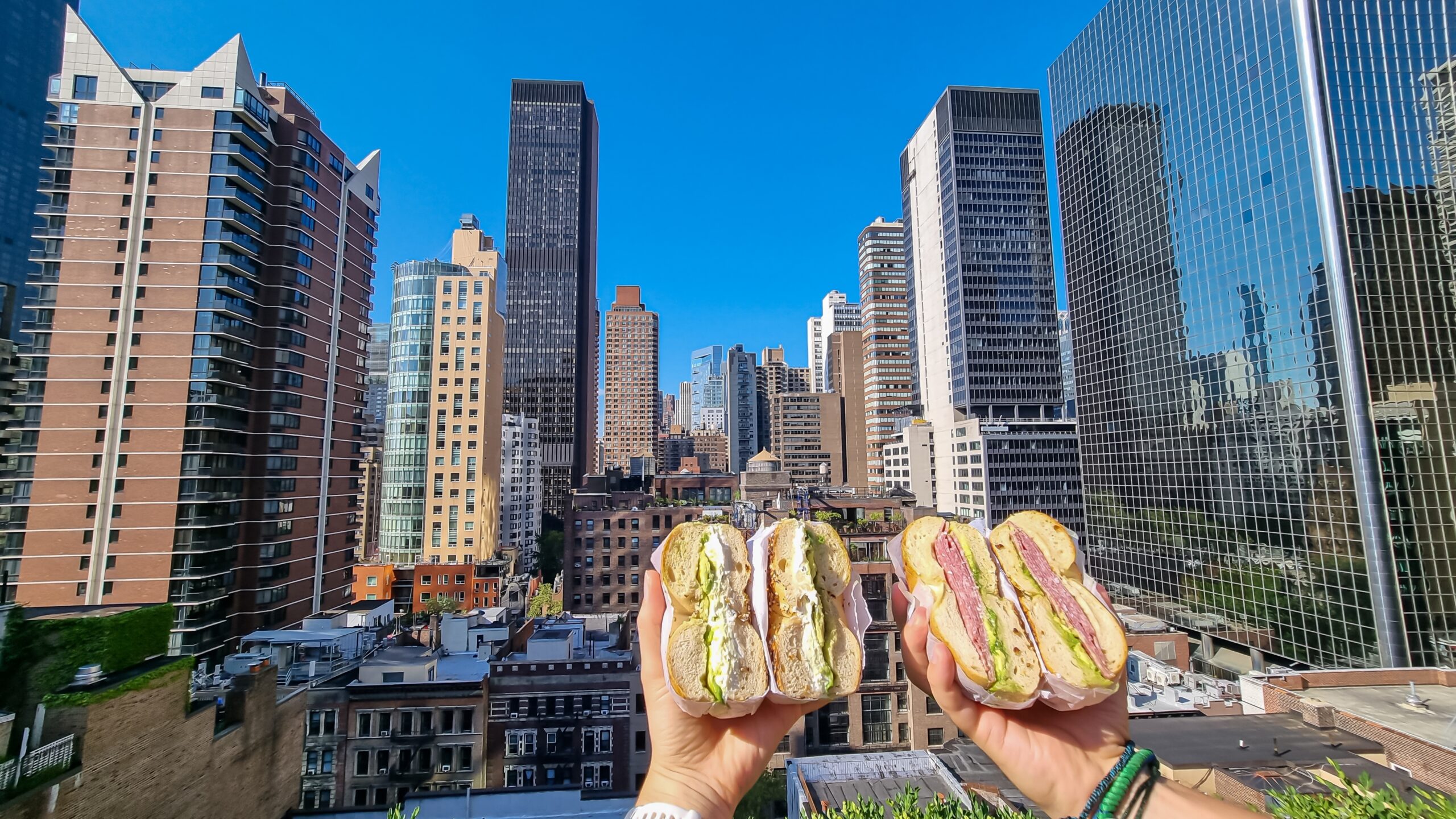
For example, you can now find bagels with guacamole and salmon, bagels with pesto and mozzarella, or even sweet versions like the cinnamon-raisin bagel stuffed with apple butter or Nutella. Some bakeries also specialize in lighter or healthier bagels, using alternative flours (whole wheat, spelt) or offering gluten-free versions to cater to the growing demand from consumers with specific dietary preferences.
Sweet bagels, once rare, are also experiencing a significant boom. Bakeries are offering daring versions like chocolate bagels or blueberry bagels with sweet cream cheese, often enjoyed as a dessert or a treat.
The “Gourmet” Bagel: When Haute Cuisine Takes Over
The current trend also leans toward gourmet bagels, where chefs reimagine the classic with sophisticated creations. In some trendy New York spots, the bagel becomes the subject of elaborate craftsmanship, with rare and refined ingredients. You can find bagels topped with foie gras, black truffle, or caviar, offering a luxurious culinary experience.
This upscale evolution of the bagel reflects New York’s unique dynamic, where haute cuisine and popular food coexist and continually reinvent each other.
The best places to enjoy a bagel in New York
Historic Institutions: Katz’s Delicatessen, Russ & Daughters, and H&H Bagels
New York is full of iconic bakeries where you can enjoy both traditional and delicious bagels. Katz’s Delicatessen, a Lower East Side institution, is famous for its pastrami sandwiches, but their bagels are a must-try for tradition lovers. Russ & Daughters, open since 1914, is another legendary spot in the city, specializing in bagels with smoked salmon and other marinated fish.
H&H Bagels, a legend of the Upper West Side, began in the 1970s and quickly became a New York symbol. They are known for the exceptional quality of their bagels, which remain among the most sought-after in the city.
Contemporary addresses: Ess-a-Bagel, Bagel Hole, and Tompkins Square Bagels
For those who want to discover slightly more modern bagels while preserving artisanal quality, Ess-a-Bagel is a must-stop. Open since 1976, Ess-a-Bagel offers huge bagels, fluffy on the inside and crispy on the outside, with a wide variety of fillings, ranging from classic to bold.
Bagel Hole, located in Brooklyn, embodies the old-school bagel craft, with a denser texture and smaller size than the average New York bagel. This small shop may not look like much, but it is often recommended by bagel purists.
Tompkins Square Bagels, in the East Village, is another major player in New York’s modern bagel scene. They offer both traditional and innovative bagels, as well as more elaborate fillings like smoked tofu or almond butter.
Emerging artisans and concepts: Black Seed Bagels and Sadelle’s
Finally, for those looking to try reimagined bagels, Black Seed Bagels is a spot you can’t miss. This bakery, founded in 2014, offers a fusion between New York and Montreal-style bagels, with smaller, slightly sweeter bagels baked in wood-fired ovens and topped with various inventive toppings.
Sadelle’s, located in SoHo, represents the modern luxury of the bagel. This spot is known for its elegant presentations and sophisticated toppings like perfectly smoked salmon accompanied by caviar or fine cheeses.
The Bagel, a timeless symbol of New York
The bagel, though it has come a long way since its humble beginnings in Jewish bakeries in the Lower East Side, remains today a fundamental element of New York’s culture. Whether enjoyed in its simplest form or transformed into a daring culinary creation, it continues to captivate food lovers from around the world.
In a city like New York, always in transformation, the bagel remains a symbol of its multicultural roots while adapting to new food trends. Whether you’re a purist or a flavor adventurer, there’s always a bagel waiting for you in this vibrant and bustling city.